 Veröffentlicht von
 The Glyptothek Munich is one of the most important museums of ancient sculpture in Europe. Located at Königsplatz in the heart of Munich’s museum district, the Glyptothek houses a remarkable collection of Greek and Roman statues spanning more than 1,000 years of classical art history.

For visitors interested in antiquity, mythology, archaeology or classical art, the Glyptothek is one of Munich’s cultural highlights. It is smaller and quieter than the German Museum or the Pinakothek galleries, but it offers a focused and impressive experience.
Munich Cultural Tours
Explore guided museum tours and historical walks in Munich.
What is the Glyptothek?
The word “Glyptothek” comes from Greek and means “collection of sculptures.” The museum specializes in ancient stone sculptures, mainly from Greece and Rome.
The collection was founded in the early 19th century by Crown Prince Ludwig of Bavaria (later King Ludwig I). He was passionate about classical antiquity and wanted Munich to become a “new Athens on the Isar.”
Today, the Glyptothek presents sculptures from:
- Archaic Greece (around 600 BC)
- Classical Greece (5th–4th century BC)
- Hellenistic period
- Roman Empire
Location: Königsplatz
The Glyptothek is located at Königsplatz, one of Munich’s most impressive neoclassical squares. The architecture was inspired by ancient Greek temples.
Nearby attractions include:
This area is ideal for a full cultural day in Munich.
Architecture of the Building
The Glyptothek building was constructed between 1816 and 1830 in neoclassical style. The architect Leo von Klenze designed it to resemble an ancient temple.
The exterior features columns and symmetrical proportions, while the interior consists of large halls arranged around a central courtyard.
During World War II, the museum was heavily damaged. The reconstruction after the war preserved the historical structure while introducing a more minimalist interior design.
Our tip: Sightseeing tour through Munich |
| A great possibility to see a lot of Munich in 1-2 days are the so called Hop On / Hop off buses. These are red double-decker buses in British style, which drive on 3 different routes through Munich. You can get off at many stops and continue with a later bus. Tickets for the hop on / hop off buses are much cheaper on the Internet at Getyourguide than on site. Further information: Click here |
Highlights of the Collection
Barberini Faun
This famous Hellenistic sculpture shows a sleeping satyr in a dynamic pose. It is one of the museum’s most celebrated pieces.
Aegina Sculptures
The pediment sculptures from the Temple of Aphaia on the Greek island of Aegina are among the most important works in the collection. They illustrate early classical Greek art.
Kouroi Statues
Archaic kouroi (youth statues) show the development of early Greek sculpture with their characteristic “Archaic smile.”
Roman Portrait Busts
The museum also displays Roman portrait busts that offer insight into imperial representation and realism.
Archaic Period
The Archaic period (around 700–480 BC) marks the beginning of monumental Greek sculpture. Figures are often rigid and symmetrical, reflecting Egyptian influence.
In the Glyptothek, you can observe the gradual shift toward more naturalistic proportions.
Classical Period
The Classical period (5th–4th century BC) is often considered the golden age of Greek sculpture. Artists achieved ideal proportions, balance and movement.
The sculptures from Aegina demonstrate this artistic evolution clearly.
Hellenistic Period
The Hellenistic period introduced more dramatic poses and emotional expression. The Barberini Faun is a prime example.
Roman Art
Roman sculpture often copied Greek originals but also introduced realistic portraiture. The Glyptothek includes several well-preserved Roman busts.
How Long Should You Visit?
- 1 hour: Quick overview of main halls
- 2 hours: Detailed exploration
- Half day: Combine with nearby Pinakothek museums
Who Should Visit?
- History lovers
- Archaeology enthusiasts
- Art students
- Visitors seeking a quieter museum experience
Practical Visitor Information
- Location: Königsplatz
- Open most days (check official website)
- Moderate entrance fee
- Audio guides available
How to Get There
The nearest U-Bahn station is Königsplatz. The museum is also within walking distance of the main train station (Hauptbahnhof).
Video Glyptothek Munich (Youtube)
Pros and Cons
Pros
- World-class ancient sculptures
- Beautiful neoclassical architecture
- Central location
- Less crowded than major museums
Cons
- Specialized theme (mainly sculptures)
- Limited interactive elements
Is the Glyptothek Worth Visiting?
Yes. The Glyptothek is one of the finest collections of ancient sculpture in Europe. Even if you are not an art expert, the impressive statues and peaceful atmosphere make it a rewarding cultural stop in Munich.
Our recommendation: Best city tours in Munich
3 bus-lines, all with one ticket: Be sure to buy tickets for CitySightseeing Munich cheaply online using this link
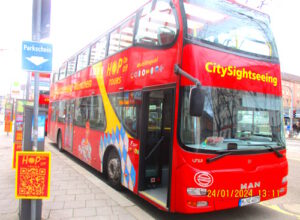
You can get out on the way and continue on the next bus (hop-on hop-off)
Bookable online with a discount using using this link
All 3 lines depart directly opposite Munich main station
Other well-known Glyptothekes can be found for example in Copenhagen, Vienna and Athens. The great art museum Lenbachhaus is not far away.