 Veröffentlicht von
 The new Munich Airport opened in 1992. At the same time, the former airport Munich-Riem was shut down permanently because it had become outdated and far too small for modern air traffic. The current airport is located well outside the city, around 30 km north of Munich, close to the town of Freising.
Building the new airport was controversial. During the construction phase in the 1980s, the small village of Franzheim disappeared from the map and its residents had to relocate despite protests. Today, Munich Airport is generally regarded as Germany’s second-busiest airport after Frankfurt.
|
Day excursion from Munichto Castle Neuschwanstein Popular day tours by bus take you from Munich to the world-famous Neuschwanstein Castle. Many tours also include additional highlights in the area, such as Linderhof. |
Passenger numbers grew quickly after the opening. To handle the increasing traffic, Terminal 2 was added in 2003, and the airport campus has continued to expand step by step. A third runway has been discussed for years, but the project remains politically controversial and is currently not under construction.
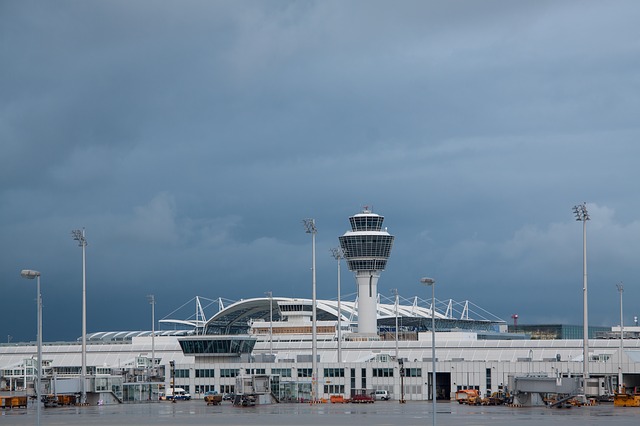
Officially, the airport is named “Franz Josef Strauß Airport”. In everyday language, most people simply say Munich Airport, because it is the only commercial airport serving the city. The official codes are IATA: MUC and ICAO: EDDM.
The airport site covers roughly 16 km² (about 1,575 hectares). It is also an important workplace for the region: tens of thousands of people work on the airport campus in airlines, handling, retail, gastronomy and many service companies.
Getting to Munich Airport by S-Bahn
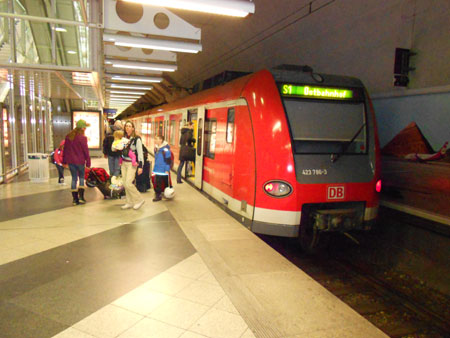
S-Bahn connections: In the early years, the new airport was often criticized for its weak transport links. Today, two S-Bahn lines connect the airport with Munich’s city centre: S1 and S8. Both lines stop at major central stations such as Hauptbahnhof, Marienplatz, Karlsplatz (Stachus) and Ostbahnhof.
The S-Bahn trains run frequently during the day (typically every 20 minutes per line). Travel time to the city centre is usually around 40–50 minutes. Ticket prices depend on the tariff zones; for many visitors, a day ticket can be a better deal than buying several single tickets (especially for two people). For trips beyond Munich, the Bayern Ticket can also be useful, as it is valid on regional trains and S-Bahn services.
Other rail projects: Over the years, several ideas were discussed to speed up the airport connection, including a long-distance rail station and the famous Transrapid project. The Transrapid plan was ultimately canceled, mainly due to high costs. An “airport express” concept is still discussed from time to time, but for now the S-Bahn remains the primary rail connection.
Interesting Munich walking tour: A well-rated guided tour about the Nazi era and World War II (starts at Marienplatz, approx. 2.5 hours): More information and booking
Airport buses
By bus: There are express buses from Munich Airport to the city centre. The price and travel time are often similar to the S-Bahn, but buses can be slower during rush hour due to traffic. In addition, local buses connect the airport with nearby towns such as Freising.
By car, parking and taxi
By car: Munich Airport is well signposted. It is connected to the motorway network, for example via the A92. Visitors arriving from other directions typically use Munich’s motorway ring and follow the airport signs.
Parking: Parking at the airport is convenient but often expensive, especially for longer stays. Many travelers use external parking providers in the surrounding area, which usually include a shuttle service to the terminals.
Taxi: Taxis are available 24/7. A taxi ride to central Munich is significantly more expensive than the S-Bahn and is not always much faster, depending on traffic.
Food and beer at Munich Airport
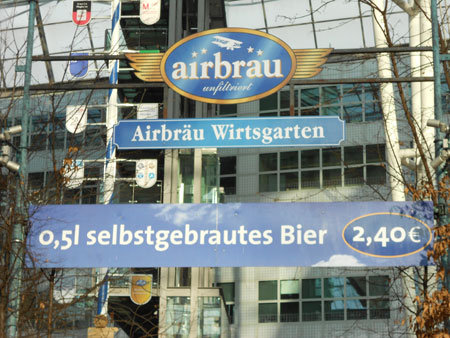
As a major international hub, Munich Airport offers a wide range of restaurants and snack bars, including well-known international chains. A special attraction is Airbräu, an airport brewery with a beer garden and typically reasonable prices for an airport setting.
Moving around inside the terminals
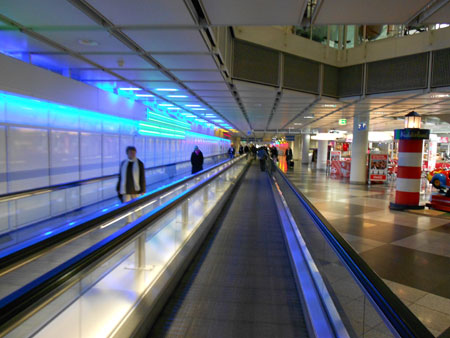
Distances inside Munich Airport can be long, especially between gates. That’s why you will find several moving walkways (horizontal escalators) that help passengers get around faster.
More airports in our guides:
Venice Marco Polo Airport |
Transfer London airports (Heathrow etc.) |
Vienna Airport: CAT train to the city centre