 Veröffentlicht von
 Even though many traditional Bavarian habits are slowly disappearing in modern Munich, one thing remains very popular: people still love Bavarian food. Locals enjoy cooking it at home, and visitors will find it on countless menus – from simple neighbourhood inns to large beer halls. Bavarian cuisine is known for being hearty and high in calories. Pork, rich sauces, dumplings, pastries and cabbage are typical ingredients, and portions are often generous.
Historically, Bavarian cuisine is closely connected to neighbouring regions. You can see strong influences from Franconia, Austria, Swabia and Bohemia (Czech Republic). Some dishes feel more Austrian, others more Swabian – and many recipes overlap across borders. In traditional restaurants, menus are often written partly in Bavarian dialect. This is not only a nod to local identity, but also a small “authenticity signal” for guests: here you are expected to eat like in Bavaria.
Soups
Soups are the classic starter in an inn in Bavaria. In many places you will find soups listed under “Starters” rather than their own category. Traditional favourites include semolina dumpling soup (small, soft dumplings made from semolina), baking pea soup (crunchy baked dough pieces served in beef broth), liver spaetzle soup, and liver dumpling soup (a hearty broth with liver dumplings and herbs).
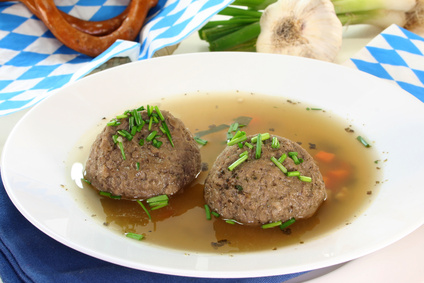
Liver dumpling soup ; Picture: © silencefoto – Fotolia.com
Mushroom soup usually means a creamy soup made with mushrooms such as button mushrooms or oyster mushrooms. A Kupiziner soup is a more unusual Bavarian speciality with liver sausage, onions and egg – it sounds strange at first, but it works surprisingly well. The pretzel soup is very Bavarian: beef broth with roasted onion and crunchy pretzel pieces. A similar dish is bread soup, where brown bread replaces the pretzel.
Main courses with meat
Probably the best-known dish in Bavarian cuisine is the knuckle of pork (Schweinshaxe). It is a large piece of pork with bone and crispy skin, typically served with bread dumplings or potato dumplings and, very often, sauerkraut. If this still feels too “light”, some menus offer surhaxn – a version that is even richer and fattier.
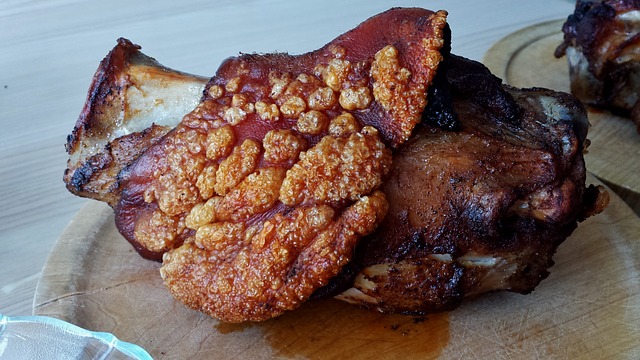
The knuckle of pork is the figurehead of Bavarian cuisine
The classic roast pork is also very common, typically with dumplings and sauerkraut. In many restaurants, sauerkraut is replaced by a warm cabbage salad with bacon. Another popular variant is beer roast – roast pork served with a flavourful beer sauce.
Maultauschen are more typical for Swabian cuisine. These large dumplings are filled with minced meat and spices and are often described as a “German ravioli” – only much bigger and heavier.
Schlemmer-Tour Viktualienmarkt MunichA very popular guided tour in Munich is the gourmet tour over the famous Viktualienmarkt in the city centre. Duration of the market tour about 2 hours, you can try many things for free: Sausage, cheese, fruits and many Bavarian specialities. Well done, entertaining and informative. Our recommendation. >>>>> More Information and Booking |
Pichelsteiner Stew: A hearty vegetable stew with meat (often beef, pork and lamb) plus celery, carrots, leek and parsley. It is not vegetarian, but compared to many other Bavarian dishes it has a relatively high vegetable content.
Blood sausage and liver sausage are traditionally served with boiled potatoes and sauerkraut. Blood sausage contains blood (as the name suggests), while liver sausage is made with liver and a mild mix of spices.
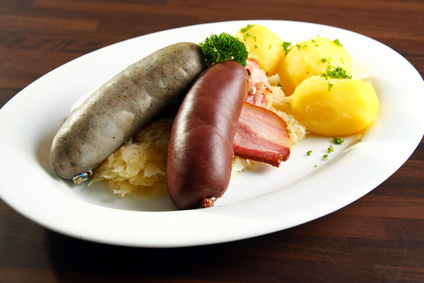
Blood and liver sausage, boiled potatoes and sauerkraut ; Picture: © foodinaire – Fotolia.com
Plate-meat (boiled beef) is sometimes eaten as a morning snack, similar to how Weißwurst is enjoyed earlier in the day. It is served with horseradish and herbs such as chives.
A classic “special occasion” dish is filled veal breast, usually stuffed with bread dough, herbs and parsley. It is often one of the more expensive meat dishes on Bavarian menus.
Roast duck and roast goose are more common in Bavaria than in many other regions of Germany. Goose is especially popular around Christmas, while duck is often offered in winter. Many Bavarian restaurants also serve game because the region has large forests. Typical dishes include venison stew, wild boar goulash and pheasant. Game is generally pricey but considered a seasonal highlight.
Offal dishes are also part of Bavarian tradition. Famous examples include sour Lüngerl, calf kidneys and tripe (often prepared with vinegar). These dishes are not for everyone, but they still appear in classic inns.
Meatballs (often called Fleischpflanzerl in Bavaria) are very common. You can get them with potato salad, in a bread roll, or as a main course with gravy. Less common in Munich but still known are Fischpflanzerl – fish-based “meatballs”.
A Swabian-inspired classic often found in Munich is onion roast roast (Zwiebelrostbraten): tender beef with fried onions, usually served with Spätzle. It is delicious, but rarely cheap.
Another well-known Bavarian sausage variety is press-sack. The white press sack is made from offal and often served with vinegar. The red press sack contains blood, which gives it its colour. Closely related is Sulz – meat in aspic, usually served cold with vinegar and onions.
Supplements
Popular side dishes include bread dumplings, which taste best homemade from old bread rolls, eggs, milk, salt and parsley. Potato dumplings are just as common. Spätzle (originally Swabian) are soft homemade noodles made from flour, milk, eggs and salt. Typical combinations include Krautspätzle (Spätzle with sauerkraut, bacon and onion) and Kässpätzle (Spätzle mixed with melted cheese and roasted onions). In Munich, you will also sometimes find Maultaschen as a side dish or small meal.
Sauerkraut is served with many meat dishes. Another classic is coleslaw with bacon – cabbage mixed with bacon, onion and often caraway. Restaurants frequently offer a small mixed salad as a side dish (for example cabbage, tomatoes, cucumber, potatoes and radish). In Bavaria, bread is usually served with cold dishes, not with hot meals.
Dumpling
Besides bread and potato dumplings, there are many other varieties. Semolina dumplings are used in soup, while liver dumplings can be served in broth or as a main course with potatoes and sauerkraut. Leftover dumplings often become a simple evening meal: dumpling salad with vinegar, oil and pepper. If slices of cold roast meat are added, you get a heartier version sometimes called vinegar dumplings.
Bacon dumplings are bread dumplings with small pieces of bacon – a very tasty side dish. In Munich you may also see Bohemian dumplings, simple flour dumplings served in slices. Dumplings are especially useful when dishes come with lots of sauce.
Vegetarian
Schwammerl mit Knödel: Bread dumplings with mushroom sauce. The best versions use wild mushrooms from Bavarian forests, such as porcini (Steinpilze), though these are more expensive.
Kässpätzle: Spätzle mixed with melted cheese and roasted onions. Originally Swabian, but very common in Munich and a reliable vegetarian option.
Reiberdatschi are potato pancakes, often served with apple sauce or as a side dish.
Desserts / Cakes
Plum-dachi (Zwetschgendatschi) is a popular sheet cake with fresh plums, especially in late summer and early autumn.
Yeast dumplings originally come from Austrian cuisine. They are filled and served with poppy seeds and vanilla sauce.
Krapfen (doughnuts) are sold in bakeries and are especially popular during carnival season.
Kaiserschmarn is another famous Austrian import: roughly torn pieces of pancake with sugar and raisins.
Plum dumplings are potato dumplings with a whole plum inside, served with sugar, cinnamon and often vanilla sauce. Similar but rarer are cherry dumplings.
Snacks / cold dishes
The most famous Bavarian “Brotzeit” is the Weißwurst. According to tradition it should be eaten before noon. Typically it comes with a fresh pretzel (Brezn) and beer – often wheat beer (Weißbier).
Leberkäse is another Munich favourite. Many locals have a preferred butcher where they buy the best version. A classic snack is the Leberkässemmel (Leberkäse in a bread roll). Despite the name, it contains neither liver nor cheese – it is mainly made from beef and pork.
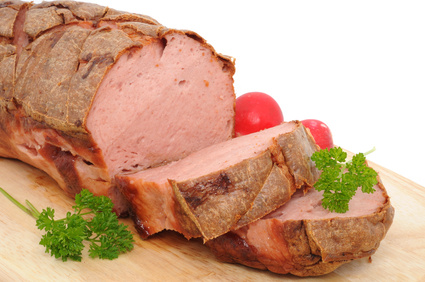
Bavarian Leberkäse; Picture: © PeJo – Fotolia.com
Swollen ones are fried white sausages without skin (sometimes called wool sausages).
A very popular cheese in Bavaria is Obatzda – a dressed Camembert mixed with onion, chives and often a bit of caraway.
Schweinsbratwurst are flavourful Bavarian bratwursts, often served with potato salad or sauerkraut, and they are a simple but very typical option in many inns.