 Veröffentlicht von
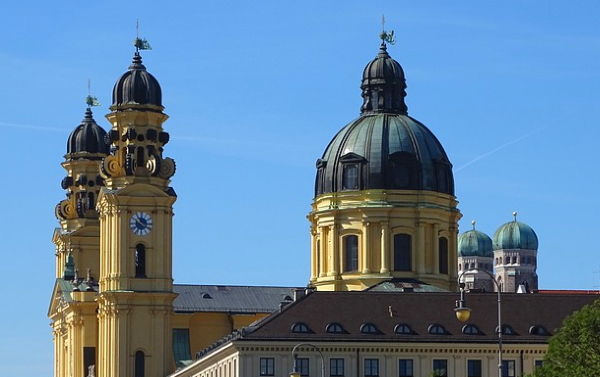
 The Theatiner Church in Munich, officially called Theatinerkirche St. Kajetan, is one of the most striking baroque buildings in the Bavarian capital. With its bright yellow façade and twin towers dominating Odeonsplatz, the church is impossible to miss.

Located at the northern edge of the historic Old Town, directly next to the Munich Residence and close to the Feldherrnhalle, the Theatiner Church is one of the architectural highlights of central Munich.
This guide covers:
- History and origins of the church
- Architecture and interior highlights
- How long to plan
- Practical visitor information
- How to combine it with nearby attractions
Guided Tours Through Munich’s Historic Center
Odeonsplatz, the Residence and the Theatiner Church are often included in guided walking tours of Munich’s Old Town. A guide helps explain the royal history behind these buildings.
Where Is the Theatiner Church?
The Theatiner Church stands on Odeonsplatz, one of Munich’s most elegant squares. Its location makes it easy to combine with several top attractions:
- Munich Residence (right next door)
- Hofgarten (behind the church)
- Feldherrnhalle (across the square)
From here, you can walk to Marienplatz in about 10 minutes.
History of the Theatiner Church
The church was commissioned in 1663 by Elector Ferdinand Maria and his wife, Henriette Adelaide of Savoy. It was built to celebrate the birth of their long-awaited heir to the Bavarian throne.
The design was inspired by Italian baroque architecture, especially Roman churches. Italian architect Agostino Barelli led the project, bringing Mediterranean style to Munich.
The church later became the burial site for members of the Bavarian Wittelsbach dynasty.
Architecture: Italian Baroque in Munich
The Theatiner Church is one of the best examples of Italian high baroque north of the Alps.
The Exterior
The yellow façade and twin towers were completed later in the 18th century. The color gives the church a warm and Mediterranean appearance, especially in sunlight.
The dome is clearly visible from many parts of central Munich and contributes to the skyline.
The Interior
Inside, the church surprises visitors with its bright white stucco decoration. Unlike many richly colored baroque churches, the Theatinerkirche has an almost monochrome interior.
Highlights include:
- Ornate stucco work
- Large dome above the crossing
- Impressive altar area
- Crypt of the Wittelsbach dynasty
The white interior creates a calm and elegant atmosphere.
Munich city tour on the subject of the Third ReichFrom our point of view a well done and interesting city tour: Munich was the beginning of the Nazis, Adolf Hitler lived in the city for many years. Munich is known for the resistance of the White Rose group. At the end of the war the city lay in ruins. Start of the tour at Marienplatz, guided tour on foot, duration about 2.5 hours. |
The Crypt
The crypt contains the tombs of Bavarian rulers. For visitors interested in Bavarian royal history, this is an important section of the church.
If you are also visiting the Munich Residence, the crypt provides additional historical context.
How Long Should You Plan?
- 15–20 minutes: Quick interior visit
- 30–40 minutes: Include crypt and detailed exploration
- 1 hour: Combine with Residence and Hofgarten
The church itself does not require a long visit, but its central location makes it easy to integrate into a broader Old Town itinerary.
Best Time to Visit
- Morning hours are quieter.
- Midday can be busier due to tour groups.
- Evening light outside is excellent for photography.
Please respect religious services and maintain quiet inside.
How to Get There
The easiest way is via:
- U-Bahn: U3, U4, U5 or U6 to Odeonsplatz
- Tram and bus connections available
More travel tips:
Combine the Theatiner Church with Nearby Attractions
Residence + Theatinerkirche
Start with a guided visit of the Munich Residence and then step into the church for architectural contrast.
Odeonsplatz Walk
Explore Odeonsplatz, the Feldherrnhalle, and stroll through the Hofgarten.
Old Town Route
Continue toward Marienplatz and the Frauenkirche.
Stay Near Odeonsplatz
Accommodation near Odeonsplatz allows easy walking access to the Residence, Theatiner Church and central Munich attractions.
Search hotels in central Munich
See also: Good hotels in Munich
Pros and Cons
Pros
- Impressive baroque architecture
- Central location
- Free entry
- Rich Bavarian history
Cons
- Short visit time
- Can be crowded during peak season
Is the Theatiner Church Worth Visiting?
Yes, especially because it is centrally located and architecturally distinctive. Even if you spend only 15 minutes inside, it adds an important historical and visual highlight to your Munich itinerary.
More Historic Munich Guides
